
Self-monitoring in fish and shellfish products: key documents and measurements in practice
Self-monitoring in fish and shellfish products is a practical matter: what to measure, what to record, and how to ensure that information can be found quickly, even when in a hurry. When measurements and documents are clear and routines are established, compliance doesn't feel like a separate project but part of the smooth everyday running of a restaurant, shop…

You can leave us a call request
Leave your name and number and we'll call you back.
Self-monitoring in fish and shellfish products it's about practical application: what is measured, what is recorded, and how to ensure that information can be found quickly even in a rush. When measurements and documents are clear and routines are established, compliance doesn't feel like a separate project but a part of smooth everyday life in a restaurant, shop, or production kitchen.
This checklist-style guide covers the most important monitoring and documentation for processing fish and shellfish products. It also includes tips on how to structure your record-keeping so that the same information serves both your own operations and official inspections.
Self-monitoring in fish and shellfish products: what needs to be documented?
Good self-monitoring rests on two fundamental pillars: risk management and traceability. In fish and shellfish products, risks are particularly related to temperature deviations, cross-contamination, allergens, and the quality and origin of the raw material. The goal of documentation is not the volume of paper, but to be able to demonstrate that your operations are controlled and repeatable.
A functional documentation package is often surprisingly concise when it's targeted at the right points in the process. Make logging so easy that it happens where the work is done (receiving, cold store, workstations, serving/takeaway). Then, entries won't be forgotten due to memory, and deviations can be reacted to immediately.
Essential documents that should always be kept handy Once these are in order, self-monitoring becomes a clear framework on which measurements and follow-ups are easy to build.
Self-monitoring plan Describe the processes, risk points, responsibilities, limits (e.g. temperatures) and actions in case of deviations.
Traceability information Supplier, batch details, delivery date and any packaging markings/accompanying documents so that the product batch can be traced if necessary.
Cleaning and Sanitation Programme What is to be cleaned, with what, how often, and who is responsible; also including the management of equipment and cutting surfaces.
Allergen control Procedures for the prevention of cross-contamination and the communication of information to staff and customers.
Handling of exceptions Logging template: what happened, what it affected, what was done, and how to prevent recurrence.
If you're looking for background terms and practical interpretations, it's a good idea to also have a simplified glossary available for your staff: Glossary in plain languageThis particularly facilitates onboarding and ensures that everyone is talking about the same things using the same words.
Temperature and sensory observations in practice: the most important measurements
In fish and shellfish products, temperature is often the metric that determines both safety and quality. Measurements do not need to be complicated when they are focused on critical points: at reception, during storage, potential thawing, and during preparation and serving. A good rule of thumb is to always measure when responsibility transfers or conditions change.
A number alone isn't always enough. Sensory observations (smell, colour, texture), packaging condition, and the state of ice/cold packs are practical confirmations that supplement temperature. When you record observations in a consistent manner, potential trends (e.g. a "silent rise" in cold room temperature) can be identified in time.
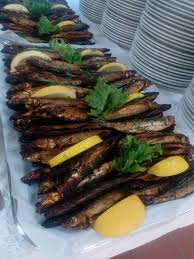
It is advisable to review official guidelines and regulatory background from a reliable source; for example, the entirety of the European Union's Food Hygiene Regulation is summarised as background here: Food hygieneHowever, the most important thing in self-monitoring is that you have your own limits, measurement intervals, and procedures documented and that they are followed.
Measurements and observations that make everyday life easier These allow you to quickly detect deviations without measurement becoming "extra work".
Receiving temperature Measure batch-by-batch or risk-based (e.g. new suppliers, long deliveries, heatwaves) and record deviations immediately.
Cold storage (cold room/display fridge) Daily checks and continuous monitoring as needed; also record corrective actions.
Defrosting and intermediate storage Where it is melted, for how long and how to prevent the risk of contamination of the flows; mark the start and end times.
Sensory perceptions Smell, colour, texture, packaging integrity and dates; record "OK" only if a common checklist is in use.
Calibration and condition of instruments Record checks (e.g. ice water/boiling water test) and changes to ensure measurement results are reliable.
When temperature and deviation logs are made where the work takes place, self-monitoring changes from an audit to a routine.
Reception and traceability: batch information, dates, and supplier tracking
The incoming inspection is for many operators the most effective place to reduce risk. When a batch comes through the door, you still have the opportunity to react before the product is mixed into storage or ends up on display. With fish and seafood products, this is particularly important because quality and shelf life are sensitive to even small deviations.
Traceability should be built in such a way that a batch can be linked to both the supplier and the sold/manufactured product if necessary. This does not mean a complex system: a clear batch marking upon receipt and a consistent way of transferring information to internal containers (repackaging, opened packages) already achieve a lot. For operators like Rågårds Lax Oy Ab, who have both products and customers across different channels, traceability is also customer service.
Brief note
When purchasing raw materials, even small checks at the point of receipt are invaluable for self-monitoring and will save you time later. In particular, check the packaging labels and product information before storing.
Supplier monitoring is practically a short list: whose products have been of consistent quality, with whom there are recurring temperature or packaging deviations, and how they were responded to. When the same supplier repeatedly causes corrective actions, it is important data for self-monitoring and also for the development of procurement.
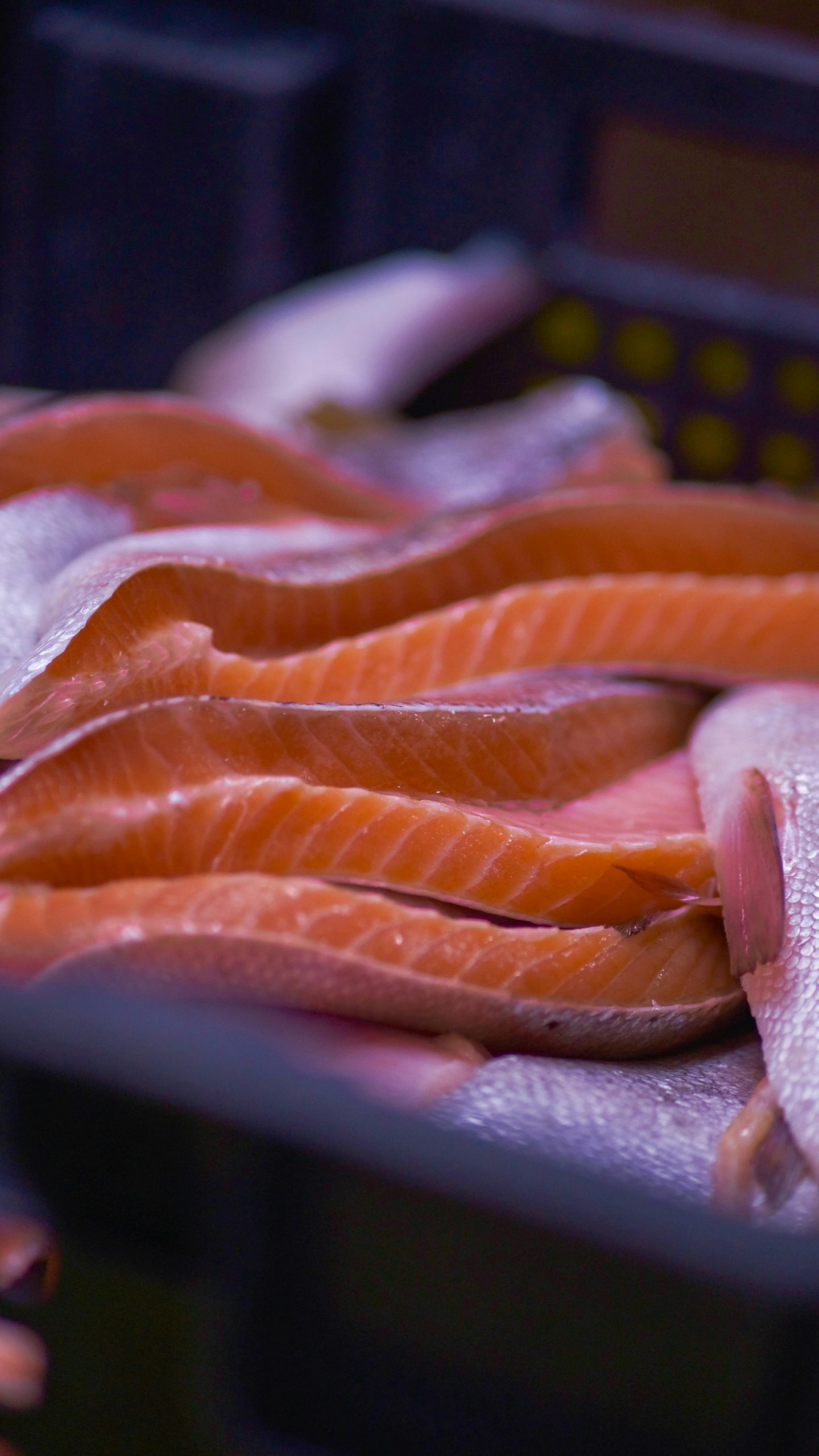
Self-monitoring in fish and seafood products in the kitchen and shop: hygiene, cross-contamination and allergens
Once the raw material has been correctly received, the next major item is working hygiene. In the kitchen and shop, risks typically arise when workstations are changed, when the same utensils are used, and when shortcuts are taken in a hurry. Fish and shellfish are also significant allergens, so information management and prevention of cross-contamination are key.
Practical functionality arises from clear work routines: for instance, separate cutting boards/knives, "mandatory moments" for handwashing and glove changes, and ensuring raw and ready-to-eat products do not come into contact. If you handle both cooked and raw fish, it is advisable to describe the processes in your self-monitoring plan from a workflow perspective, rather than just as a list of rules.
| Monitoring | What is to be recorded | When | Corrective action (example) |
|---|---|---|---|
| Fridge/display case temperature | Date, time, measurement location | Daily / shift by shift | Move products to standby cooling, service alarm, increase monitoring |
| Goods inward inspection | Batch information, packaging condition, temperature, sensory observations | In each delivery | Reject or isolate batch, claim to supplier, document |
| Cleaning and equipment replacement | Action, substance, factor, deviation | According to the plan + as needed | Re-cleaning, workstation organisation, further induction |
| Allergen labelling and information | Recipe change, product specification, communication to staff | When the recipe/supplier changes | Update product cards and point-of-sale information, inform the shift |
For further reading on the risks of routines, it's also worth looking at a summary of typical challenges: The most common risks in the seafood sector - and how to manage themWhen risks are identified in one's own environment (premises, equipment, personnel), self-monitoring genuinely becomes company-specific.
Streamlining record-keeping: templates, responsibilities, and handling of deviations
Often, the biggest pain point in self-monitoring isn't a lack of knowledge of what should be done, but rather how to ensure it's done consistently from one shift to the next. The solution lies in clear responsibilities and lightweight logging templates. One page per topic (temperatures, receiving, cleanliness, deviations) is often better than a thick folder that nobody opens.
Think of logging deviations as an "operational permit": if a temperature deviation occurs, the log entry details what you did immediately and how you ensured there was no risk to the customer. This way, self-monitoring serves you personally — and at the same time, it's credible proof externally. Staff onboarding also becomes more efficient when new employees see examples of what constitutes a sufficient entry.
A practical way to build logging These will make self-monitoring a repeatable routine without heavy bureaucracy.
Assign an owner to each list For example, the shift supervisor acknowledges temperatures, the recipient acknowledges deliveries.
Keep the form at the workstation Paper or digital; the most important thing is that the note is made immediately and not at the end of the day.
Also record "OK" consistently A common checklist reduces ambiguity and improves quality.
Deviation = action + assessment + prevention Value alone is not enough: what did you do, how did it affect the products, how do you prevent repetition.
Go through the notes regularly. E.g. weekly review: trends, device failures, supplier comments, and training needs.
When you want to compare practices specifically from a sales perspective, these summaries serve as a good checklist: 10 facts about selling fish and 10 facts about selling seafoodThey help ensure that self-monitoring recording templates also support the practical requirements of sales situations.
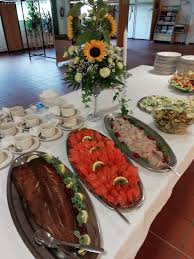
Finally, self-monitoring in fish and shellfish products works best when it is built into the company's daily routine. In an operation like Rågårds Lax Oy Ab, clarity, repeatability and rapid response are key. When measurements are limited but essential, documents are easily found, and there are ready-made action plans for deviations, both quality and safety remain under control even on busy days.
Would you like to ensure the smooth running of self-monitoring?
Let's go through the risk points of your operations and build a clear, practical routine for self-monitoring.
This is how we can help
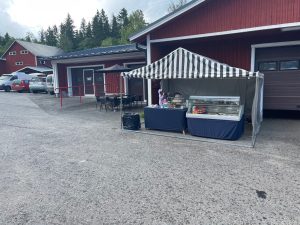
Fresh rainbow trout for sale
I sell domestic rainbow trout fresh daily to various customer groups.
Learn about the service →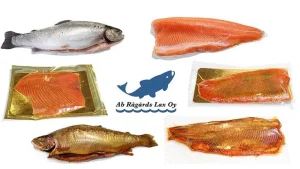
Hot smoked rainbow trout
Prepare and sell warm-smoked rainbow trout for everyday and special occasions.
Learn about the service →Cold-smoked rainbow trout
Prepares and sells cold-smoked rainbow trout to order.
Learn about the service →
Gravad rainbow trout
Offers gravad rainbow trout to customers and for resale.
Learn about the service →
Wholesale and corporate deliveries
To supply fish products to shops, restaurants, industrial kitchens and other business customers nationwide.
Learn about the service →
Orders by phone
Taking orders and further enquiries by telephone.
Learn about the service →Interested? Contact us!
Contact us using the form below