
Menu planning for restaurants: 5 ways to utilise the same rainbow trout in multiple dishes and reduce waste
Menu engineering for restaurants is one of the most effective ways to improve margins and reduce waste – especially when the same domestic raw ingredient can be processed into several different dishes. When using a consistently high-quality domestic rainbow trout, such as fish farmed and processed by Rågårds Lax Oy Ab in Skaftung (Kristiinankaupunki),…

You can leave us a call request
Leave your name and number and we'll call you back.
Menu design for restaurants is one of the most effective ways to improve profit margins and reduce waste – especially when the same domestic raw ingredient can be processed into several different dishes. With consistent domestic rainbow trout, such as the fish farmed and processed by Rågårds Lax Oy Ab in Skaftung (Kristiinankaupunki), it is easier to standardise portion sizes, cooking, and costs for both lunch and à la carte service.
This article covers five practical ways to utilise the same rainbow trout in multiple servings: different parts of the fillet, by-products, pre-preparation, and the basic principles of portion pricing. It also includes tips on receiving and self-monitoring to ensure fresh fish remains safe and its quality is maintained throughout the process.
Menu planning for restaurants: build "core ingredient" around rainbow trout
When rainbow trout is made the core ingredient of the menu, menu design becomes easier: you can build several different dishes around the same delivery, while ensuring consistent sales and more predictable waste. The advantage of domestic rainbow trout is its uniformity and availability, which reduces kitchen "variation" and helps staff replicate dishes with the same quality from day to day.
In practice, this means planning 3–5 dishes around one main protein for different sales channels: lunch, à la carte, counter display, catering, and staff meals. This way, different parts of the fish naturally end up being used appropriately: the central part for a premium dish, the belly flaps and smaller pieces for pasta or soup, the bones for stock, and the smoked edges for spreads.
The core idea When the same rainbow trout is presented in different forms, the customer gets a sense of variety, and the kitchen gains a volume advantage.
One reception, many products Design the manufacturing process so that one delivery yields both a mature and a raw component.
Vakioi annospainot Weighing and standardised portion sizes reduce "quiet waste".
Utilise different selling prices Premium bowls increase the average spend, while more affordable bowls or soups provide a side option.
Record wastage by reason Separate trims, overruns, and returns: you'll quickly find the greatest leverage.
If you need more detailed dissection and filleting to support your processing, you should also read our internal instructions: Fish preparation in a professional kitchen: filleting, portioning and waste minimisationWhen the cutting logic is consistent, the menu profitability calculations also hold up better.
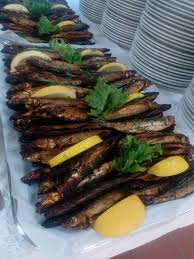
5 ways to use the same rainbow trout in multiple dishes
The five methods below work best when you decide in advance "where each piece goes". This reduces improvisation in a hurry and helps to utilise side streams in a controlled manner. At the same time, a clear production rhythm is created: for example, on Mondays receiving and pre-processing, on Tuesdays gravlax, on Wednesdays smoked components and at the end of the week hot dishes.
Rainbow trout is a raw ingredient that can be prepared using various techniques: frying, steaming, confit, gravad lax, and cold- or hot-smoking. By cleverly reusing the same spices and accompaniments (e.g., lemon–dill–rye, or miso–sesame–cucumber), a "red thread" can be created for the menu without the dishes tasting the same.
1) From the central part of the premium loin (roast or light salting)
Utilise the consistently thick middle section of the fillet for á la carte dishes where the customer pays for the structure and appearance. Standardise the portion weight (e.g., 140–180 g) and the degree of cooking. Light pre-salting improves succulence and eases peak demand by making cooking more consistent.
2) Bowl, pasta or salad from smaller pieces
Offcuts provide a cost-effective component for your lunch line: roasted rainbow trout in a bowl, rainbow trout pasta, or a warm salad. These dishes also work as sales smoothers: if demand for a premium dish fluctuates, smaller portions can be moved quickly without compromising quality.
3) Smoked or cold-smoked for display and brunch
Curing is an excellent way to increase profit margins, as the process is predictable and waste is minimised: cutting waste is minimal and the product keeps well under the right conditions. Offer cured fish as a starter, at brunch, or in a bread dish. Rågårds Lax also offers ready-made processed products, which ease production when kitchen capacity is limited.
4) Fish skeletons and heads for stock (sauces, soups, risottos)
Using salmon scraps, skin, and heads, you can create an intensive fish stock that will elevate the flavour of your soups and sauces. When the stock is made correctly from a self-monitoring perspective (rapid cooling, clear dating, and batch marking), it's also a safe way to utilize a side stream as a valuable component.
5) Trimming and smoking edges for spreads, croquettes or fillings
Not all "small" pieces will fit into a showy portion, but they are perfect for spreads, pie fillings, and for example, rainbow trout croquettes. Add cream cheese, sour cream, or whipped butter, acid (lemon/vinegar), and herbs. This way, you can create a snack-type product for sale that will increase additional sales and reduce waste.
When each part of the rainbow trout has its own designated use, waste is reduced and the profitability of the menu improves without compromising the portion experience.
Menu planning for restaurants: by-products, shelf life and self-monitoring in one package
Utilising side streams is only possible if shelf life and hygiene routines are in order. Menu design for restaurants should be done in such a way that the cold chain is not broken and risk products (such as raw and cold-smoked items) are kept in their own "lane" during the process: separate utensils, clear temperature logs and control of cross-contamination.
A good basic rule is to process raw products immediately after fresh delivery and cooked products afterwards, so that the work order supports safety. When handling fish, it is a good idea to attach a checklist to self-monitoring: receiving temperature, sensory evaluation, date markings, cooling times, and storage location. You can find more information on preventing cross-contamination on the page Allergens and the prevention of cross-contamination in fish and shellfish products.
Brief note
When waste increases, the cause is often in reception or pre-preparation routines. Even a small improvement in record-keeping is quickly reflected in the profit margin.
Annual and raw material margin: basic model for rainbow trout pricing
A profitable menu is created when portion pricing is based on actual costs and a realistic selling price. For rainbow trout, it is critical to consider the edible portion (yield) and the impact of work stages: filleting, trimming, any marinating, cooking, and waste on the line. If you buy whole or as a fillet, calculate the actual yield for both and update it regularly.
When the same rainbow trout appears in multiple dishes, it's worth calculating the "total delivery margin" too: a premium dish might have a high margin, but the side pieces play their own role in volume. This way, you avoid a situation where the kitchen is forced to sell small portions at a reduced price or leave them unused. The table below gives an indication of how different uses can be distributed across the menu.
| How to use | Typical raw ingredient | Pricing considerations |
|---|---|---|
| Premium main course (fried/baked) | Middle section, equally thick pieces | Standardise portion size and waste; sell value with appearance and ripeness |
| Lunch bowl/pasta/soup | Smaller pieces, uneven parts | Calculate working time and supplements; volume evens out raw material usage |
| Smoked/cold-smoked display | File, flat piece or preparation | Consider salting/waste and shelf life; good profit margin with a small portion size |
| Broth and sauce bases | Bones, head, skin | Divert the stream to a value; log production and cooling to self-monitoring |
If you want to anchor nutritional information (e.g. menu communication or product labels), you can use reliable sources. For example Pink salmon This provides an overview of the species, and more detailed nutritional values should be sought from databases suitable for Finnish use and supplier-specific product information.
Deliveries, consistency, and easy ordering from Rågårds Lax
When menu planning for restaurants is done “with delivery rhythm in mind,” the raw ingredient stays fresh and production runs smoothly. Ab Rågårds Lax Oy (Rågårds Lax Oy Ab), located in the village of Skaftung in Kristiinankaupunki, supplies domestic rainbow trout fresh and processed (hot-smoked, cold-smoked, and cured) to businesses and consumers across Finland. Consistent delivery is particularly beneficial for chain restaurants, catering services, and large kitchens where repeatable recipes are key.
In wholesale deliveries, it is essential for the kitchen to clearly agree on the packaging size, desired portioning (whole, fillet, individual portions), delivery dates, and any seasonal variations. Once these are standardised, you can build your menu so that rainbow trout can be "rotated" in both hot and cold dishes without last-minute substitutions.
Ordering and commissioning in a professional kitchen These practical points speed up daily life and reduce surprises at reception.
Propose quality parameters The size, filing method, and packaging markings facilitate portion standardization.
Leverage derivatives on peak days A cured or smoked product evens out the workload and keeps menu quality the same.
Build a "component bank" Mature rainbow trout, broth and spread speed up service and reduce waste.
Keep in touch with the supplier Fast phone ordering and forecasting help when sales fluctuate.
For clear instructions on how to initiate a delivery at once, please refer to the internal guide: Fresh rainbow trout directly from the farmer: how to order from Rågårds Lax in SkaftungUp-to-date contact details and the phone number can also be found on the page Contact – the fastest way to ensure availability and the right product format is often to call +35862229143.

When you combine planned butchery, the utilisation of side streams and clear portion pricing, the same rainbow trout can carry the menu through the week without the customer experiencing repetition. The end result is less waste, a better profit margin and smoother production – especially when the raw ingredient comes from a domestic supplier and deliveries can be matched to the kitchen's rhythm.
Would you like rainbow trout deliveries straight to your kitchen?
Please ask for availability, package sizes, and preparations (fresh, raw, cold-smoked, and hot-smoked) for restaurant and wholesale use throughout Finland.
This is how we can help
Fresh rainbow trout for sale
I sell domestic rainbow trout fresh daily to various customer groups.
Learn about the service →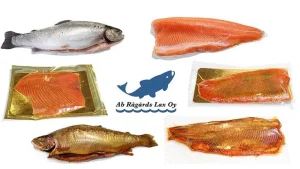
Hot smoked rainbow trout
Prepare and sell warm-smoked rainbow trout for everyday and special occasions.
Learn about the service →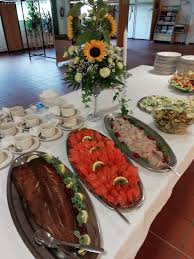
Cold-smoked rainbow trout
Prepares and sells cold-smoked rainbow trout to order.
Learn about the service →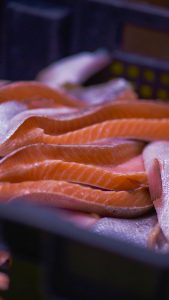
Gravad rainbow trout
Offers gravad rainbow trout to customers and for resale.
Learn about the service →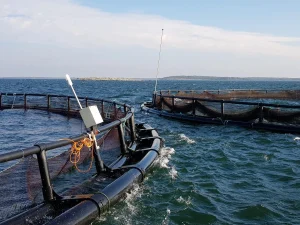
Wholesale and corporate deliveries
To supply fish products to shops, restaurants, industrial kitchens and other business customers nationwide.
Learn about the service →
Orders by phone
Taking orders and further enquiries by telephone.
Learn about the service →Interested? Contact us!
Contact us using the form below