
Allergens and the prevention of cross-contamination in fish and shellfish products
Allergen control and prevention of cross-contamination in fish and shellfish products is a theme where even small practical choices are crucial: the same knife, the wrong order of work or insufficient labelling can transfer allergens to a product that should be safe. In fish and shellfish operations like Rågårds Lax Oy Ab, risk management is...

You can leave us a call request
Leave your name and number and we'll call you back.
Allergens and the prevention of cross-contamination in fish and shellfish products It's a topic where even small practical choices matter: the same knife, incorrect sequence of operations, or inadequate labelling can transfer allergens to a product that should be safe. In seafood operations like Rågårds Lax Oy Ab, risk management is both customer safety and high-quality self-monitoring.
This article reviews key risk areas and best practices from two perspectives: production and professional kitchens. The aim is to establish everyday routines that make work easier, clarify documentation, and reduce complaints – without making the process cumbersome or unclear.
Allergens and prevention of cross-contamination in fish and shellfish products: practical risks
Fish and shellfish are themselves reportable allergens within the EU, but the everyday challenge often arises from processing multiple products, raw ingredients, and garnishes side-by-side. Cross-contamination can mean direct contact (e.g., the same cutting board) or indirect transfer (e.g., via gloves or scales). Situations where workstations change rapidly or multiple recipes are run within the same shift are particularly difficult.
The magnitude of the risk is increased by the fact that allergens do not "die" like many microbes. Heating does not necessarily remove allergenicity, and a very small amount can be sufficient to cause a reaction in the most sensitive consumers. Therefore, the most effective control measure is process design: segregation, workflow, and ensuring cleaning.
Typical sources of cross-contamination When you identify recurring "leak points", you can build clear routines and checkpoints around them.
Shared equipment Knives, tweezers, spatulas, peeling machines and filleting tables, which are used sequentially for different products without intermediate cleaning.
Weighing and packing Scales, packing benches, tape dispensers and labelling machines are surprisingly common vehicles for contamination.
Hand hygiene and protective equipment Gloves are changed too infrequently, or handwashing is neglected because people think they’re ‘just doing a quick change’.
Storage and drainage Melted ice, marinades, and thawing liquids run off into other containers, especially in the cold room and on the assembly line.
From the perspective of allergen labelling, it's good to remember that "may contain" type warnings are not a primary control measure, but a last resort if the risk cannot be reasonably eliminated. It's advisable to make decisions in your own monitoring system and justify them with a risk assessment.
Best practices for production: separation, work order, and documentation
In a production environment, the most effective way to reduce cross-contamination is to combine three things: physical separation, a clear work order, and documented, repeatable cleaning. If separate facilities are not available, a "time-based separation" (low-risk products first, then higher-risk products) can still be implemented, along with defining specific workstations for specific product groups.
A good basic rule is that allergen control must not be left to the employee's memory. In practice, this means colour coding (boards, knives, containers), designated areas, visible work instructions, and clear criteria for when interim cleaning should be performed and when a full clean is required. When the alignment is shared, shift changes do not cause disruptions.
For documentation purposes, self-monitoring works best when entries are brief but informative. If you need common terminology, Finnish glossary in plain language helps to standardise concepts from a personnel and onboarding perspective.
Allergen management is best achieved when workflow and cleaning are integrated into the process – not added in the midst of hurried activity.
Work Order and Change Points (HACCP Thinking in Everyday Life)
Practical HACCP thinking involves identifying "changeover points": where one product is switched to another and what needs to be done at that time. For example, the transition from raw material processing to packaging is critical, as is the transition from shellfish to other products. once these points have been listed, checks can be associated with them (utensils, gloves, table, scales, bin, taps).
In addition, it is worth utilising production planning: group batches that require the same product or the same processing method consecutively and minimise unnecessary changeovers. This also saves time, as cleaning is done at the right times, not constantly "just in case" or, on the other hand, too rarely.
Brief note
When self-monitoring routines are recorded concretely, onboarding also becomes easier and quality remains consistent from season to season.
Kitchen perspective: serving, line and bespoke orders without surprises
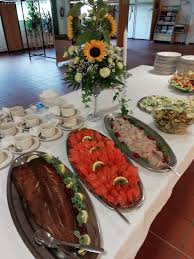
In professional kitchens, preventing cross-contamination is particularly important when multiple dishes pass through the same production line and the production pace is fast. Allergens are easily transferred from spatulas, the edges of GN containers, spice scoops, and through hands. "Silent" risks also occur during service: the same tongs are returned to the wrong container, or a cutting board is left un-wiped in the rush.
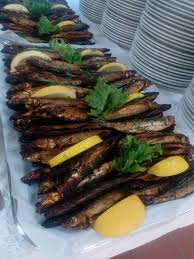
For custom orders (e.g. fish platters, seafood platters, buffet components), the greatest benefit is achieved through standardised operating models. When the recipe, work order, and marking method are always the same, even substitutes can perform correctly. A good starting point for practical purchasing and quality assessment can be found in the article What to consider when buying fish and shellfishwhich also supports kitchen acceptance inspections.
Quick kitchen management techniques These actions will reduce the risk without unduly slowing down the work.
Your own tools and clear placement A designated tool and place for each component; the return direction is marked so the pliers do not "wander".
Separate production sequence First, allergy-friendly options or speciality products on a clean surface, then standard production.
Intermediate cleaning at critical points A cutting board, knife, scales, and tap levers are the "essential quartet" for changeovers.
Allergen communication in the hall Written information and a common phrasing among staff reduce misinterpretations with the customer.
Cleaning and sanitisation: how to ensure allergens are effectively removed
When cleaning, it's essential to distinguish between two things: visible dirt and invisible allergen residue. A quick wipe may not be sufficient if protein residues remain on the surface, which can then transfer to the next batch. Effective cleaning usually consists of mechanical removal (brushing/rinsing), detergent, sufficient contact time, and thorough rinsing – and finally, drying or controlled drying of the surface.
Verification is the part that is often forgotten. In self-monitoring, it is advisable to define how to check the success of cleaning: visual inspection, rapid tests if necessary (e.g. for detecting protein residues), and documentation practices. In Finland, general background information on the principles and supervision of food hygiene can also be found From the Wikipedia article on food hygiene, but the company's own processes will decide at the practical level.
In addition, it is worth considering the "small contact surfaces": door handles, scale buttons, drawer pulls and taps. These are often the first to be touched with dirty gloves – and the last to be remembered for cleaning. When these are added to the cleaning list, the overall risk is quickly reduced.
Self-monitoring routines and training: clarity reduces errors
Self-monitoring works best as a daily compass, not a mapped-out obligation. A good model is to have brief instructions linked to the workflow: what to do before production, during production (changeover points), and at the end. When the routine is the same every day, it's also easier to record deviations – and corrective actions can be targeted correctly.
In training, it's worth combining the "why" and the "how". When staff understand that allergens can transfer in small amounts and that the consequences for the consumer can be severe, commitment improves. On the other hand, training must be concrete: where the colour-coded utensils are, what the agreed work order is, how to check labels, and what to do if cross-contamination is suspected. Good aspects for sales and practical operating procedures can also be found in the content. 10 facts about selling fish and 10 facts about selling seafoodwhich can be utilised to support onboarding.
Summary Table: practical actions and self-monitoring records
| Situation | Risk | Policy and logging |
|---|---|---|
| Product exchange (shellfish → fish) | Transfer of allergen proteins from utensils | Intermediate cleaning + glove change; log: “change point performed” |
| Weighing and labelling | Contamination from scales and tape rolls | Wipe keyboard and mouse; random check daily |
| Line and service | Optic nerve and optic nerve head. | Own grips, placeholder; deviation logging if equipment changes |
| Cold room storage | Drainage and meltwater to other containers | Tight lids, bottom shelf for “risk products”; temperature + order check |
Finally, when allergens and the prevention of cross-contamination in fish and shellfish products are made a visible process, risk management becomes easier. Routines not only protect the customer but also improve production predictability, reduce waste, and provide assurance that product information and labelling are correct for every batch.
Rågårds Lax Oy Ab can strengthen the overall picture with small, repeatable steps: define changeover points, standardise equipment and workflows, improve cleaning verification, and make record-keeping less burdensome. Once these are in place, quality will be evident in both daily operations and customer trust.
Do you want to ensure self-monitoring practices?
Let's go through the workstations, work order, and cleaning verification together so that the risk of cross-contamination is reduced in everyday life.
This is how we can help
Fresh rainbow trout for sale
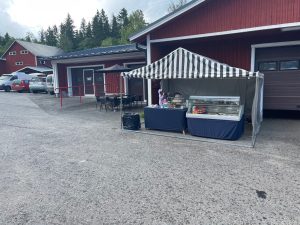
I sell domestic rainbow trout fresh daily to various customer groups.
Learn about the service →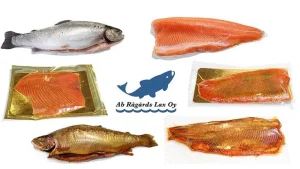
Hot smoked rainbow trout
Prepare and sell warm-smoked rainbow trout for everyday and special occasions.
Learn about the service →Cold-smoked rainbow trout
Prepares and sells cold-smoked rainbow trout to order.
Learn about the service →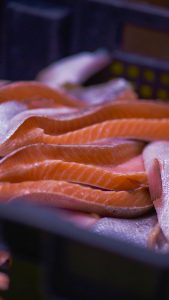
Gravad rainbow trout
Offers gravad rainbow trout to customers and for resale.
Learn about the service →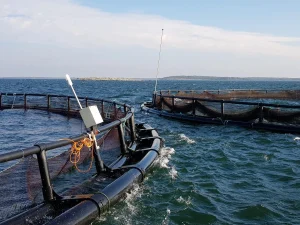
Wholesale and corporate deliveries
To supply fish products to shops, restaurants, industrial kitchens and other business customers nationwide.
Learn about the service →
Orders by phone
Taking orders and further enquiries by telephone.
Learn about the service →Interested? Contact us!
Contact us using the form below