
Frozen vs. fresh fish: when is each the best choice?
Frozen vs. fresh fish is a question that arises in both home and professional kitchens: which yields a better result and when? Many think that fresh is always higher quality, but the reality is more nuanced. When you understand the effects of freezing, the importance of the cold chain, and the requirements of different dishes,…

You can leave us a call request
Leave your name and number and we'll call you back.
Frozen vs. fresh fish A question that arises in both home kitchens and professional ones: which produces a better result and when? Many people think that fresh is always higher quality, but the reality is more complex. When you understand the effects of freezing, the importance of the cold chain, and the requirements of different dishes, the choice is often surprisingly clear.
This article debunks the most common misconceptions and compares quality, intended uses, logistics, and costs. Finally, you'll receive practical recommendations for different dishes and kitchen processes – in a supply chain like Rågårds Lax Oy Ab, these are precisely the details that determine everyday efficiency.
Frozen vs fresh fish: quality starts with handling, not the label
The core of quality isn't just whether the packaging says "fresh" or "frozen," but how the fish has been handled immediately after being caught. Filleting, chilling, hygiene practices, and temperature control have a greater impact on the final result than many people realise. Fresh fish can be excellent, but if the cold chain has been broken or the fish has stood at the wrong temperature, quality deteriorates rapidly.
Frozen fish, on the other hand, can be more 'fresh' sensorially than fresh fish that has been transported for a long time, if it was frozen quickly soon after being caught. Rapid freezing reduces the size of ice crystals and helps to preserve the texture. This is also the reason why many kitchens value a reliable frozen ingredient when a consistent end result is desired throughout the year.
Quick Guide to Quality Assessment With these observations, you can identify whether the raw material has likely been processed well.
Scent Fresh and mild; a pungent odour indicates diminished quality.
Structure Firm and elastic; a watery or crumbly feel can indicate processing or thawing errors.
Paint Ei limainen; fileen pinnan tulee olla puhdas ja tasainen.
Consistency Equally sized pieces make cooking easier and improve repeatability.
If you want to delve into the basics of the purchasing decision, practical checklists can also be found on the page What to consider when buying fish and shellfishIt helps to link quality thinking and procurement in everyday life.
Fresh fish in practice: what is it best for, and when does it pose a risk?
Fresh fish is at its best when it moves quickly and efficiently from the sea or fish farm to the kitchen. The sensory "feeling of freshness" (smell, surface gloss, firmness) is particularly highlighted in dishes where fish is the star and the preparation is gentle. For example, lightly cooked salmon, gravad salmon, or a quick pan-fry benefit from an ingredient with a firm texture and clean flavour.
The risk arises when fresh fish is stored for too long, the temperature fluctuates, or the product is handled in multiple stages. Fresh fish is logistically sensitive: if a delivery is delayed, the entire plan can fall apart. In professional kitchens, this can mean waste and menu changes; at home, it shows up as uncertainty about whether you "dare to use this anymore". The cold chain and dates are not formalities but quality and safety factors.
It is also good to remember the requirements related to parasites in certain portions. Within the EU, parasite control is associated with practices where freezing can be part of risk management, particularly when fish is served undercooked. Background and definitions can be found, for example, From the Wikipedia article on freezingwhich describes the effects of freezing on structure and shelf-life at a general level.
The best result is achieved when you choose the raw ingredient based on the dish and the process, not on the assumption that fresh is always better.
Frozen fish: consistency, availability and waste management
Frozen fish is often the best choice when ensuring consistent quality and reliable supply is paramount. When the raw ingredient arrives in the right form (portions, fillets, cubes), the kitchen process becomes more efficient: less manual work, less trimming waste, and better predictability. This is particularly beneficial when volumes fluctuate or when fish is only featured on the menu on certain days.
High-quality frozen fish doesn't automatically mean "watery". Wateriness is more often related to how thawing and cooking interact: if fish is thawed in too warm temperatures, moisture loss increases and the texture softens. When thawing is done in a controlled manner at refrigerator temperature and the surface is dried before frying, you'll get a highly competitive result. In many recipes, frozen ingredients are even more practical because they are pre-standardised.
Where is the frozen food aisle? In these situations, frozen raw ingredients improve everyday life and reduce risks.
Out of season Availability remains stable, even though the fresh batch varies.
In oral care products Cooking is more even and heat loss is reduced.
Buffet and lunch Waste management is easier when you only thaw what you need.
Processed foods Soups, sauces and gratins are forgiving of texture.
If the terms get mixed up (fresh, freshly frozen, thawed, date markings), a plain language summary can be found on the page Glossary in plain languageA common terminology also makes ordering and receiving smoother.
Brief note
When the delivery rhythm, storage, and production line are coordinated, the quality of the fish remains consistent and costs are better controlled.
Frozen vs. fresh fish in different dishes: recommendations and cooking tips
Frozen vs. fresh fish It best materialises when we consider a dish: where the small difference in texture is visible and where it isn't. In gentle cooking methods (pan-frying, steaming, sous vide), the firmness of fresh fish can be emphasised if the raw ingredient is genuinely fresh and well-handled. On the other hand, equally sized frozen portions are often easier to cook evenly, which can be more important than a small textural difference.
Thawing is the most critical stage for frozen fish. The best rule of thumb is slow thawing in the refrigerator, preferably on a rack or paper towels so the fish doesn't sit in the thawing liquid. Before frying, the surface should be dried and seasoned just before cooking, so the salt doesn't draw out too much liquid. Once you master this, frozen fish works excellently as an ingredient for "filleted dishes" too.
The summary below will help you quickly choose the right option for typical uses. It's not absolute truth, but works as a good decision tree for both the home kitchen and professional kitchen production.
| Dish / process | Recommendation | Justification |
|---|---|---|
| Sushi, ceviche, gravlax (raw) | Often frozen or fresh, controlled for loistoriski. | Safety and consistency are emphasised; requires clear policies. |
| Pan-fried, quick fillet portion | Fresh or portion-sized frozen portion | Freshness brings intensity, freezing brings reproducibility and facilitates timing. |
| Soup, sauce, fishcakes | Frozen | Structural requirements are more flexible and waste is reduced. |
| Oven-baked salmon, gratin | Both | Choose according to availability and size; ensure thawing if frozen. |
Logistics and costs: the cold chain, waste, and sensible purchasing
A financial comparison isn't just about the price per kilogram. Fresh fish might seem inexpensive, but if some of it goes unused or the quality varies, leading to increased cooking loss, the overall cost rises. Frozen fish, on the other hand, might be slightly more expensive per kilogram, but it reduces waste, makes storage easier, and portion sizes remain under control. In professional kitchens, these are factors that directly impact the profit margin.
In logistics, frozen produce offers predictability: the delivery window isn't as tight as with fresh, and a buffer can be kept in stock. Fresh, on the other hand, requires more precise planning for receiving, storage, and daily preparation. When the processes are in order, fresh works excellently – but it's more sensitive to deviations, such as transport delays or demand fluctuations.
Costing checklist These questions help you re-evaluate "cheap" and "expensive" as a whole.
Mitä hävikkiä syntyy? Measure trimming, excess and cooking loss.
Is the scope constant? Tasasokeri nopeuttaa kypsennystä ja vähentää reklamaatioita.
How is working time taken into account? Pre-portioned frozen butter can save hourly costs.
How critical is delivery reliability? If the menu leans towards fish, predictability is often most valuable.
When selecting a supplier, it's advisable to also verify their operating procedures: how the cold chain is documented, how batch tracking works, and what the complaint process is like. You can read more about these aspects on Rågårds Lax Oy Ab's website, for example, in the article The most common risks in the seafood sector - and how to manage themwhere risk management is integrated into everyday practice.
Summary: When to choose fresh and when to choose frozen?
In summary, fresh is at its best when you want to maximise that sensory "just-processed" impression and know that delivery and storage are impeccable. Frozen is at its strongest when aiming for consistency, predictability, and waste minimisation – or when the dish and process make texture less critical. In most kitchens, the sensible solution is not either/or, but a combination of both, depending on the menu and production.
Frozen vs. fresh fish It is therefore worth solving with three questions: what is the dish, what is the preparation process, and how secure is the supply chain in that specific situation? Once these are clear, the choice changes from an opinion to a professional decision – and the result is visible in both taste and profitability.
If you wish to discuss your own usage needs, products, or delivery schedules, you can find more information and contact channels on the page ContactA well-chosen ingredient and a clear process make fish an easy and reliable part of the menu.
Do you want to ensure consistent fish every day?
Tell us your intended use, and we will help you choose between fresh and frozen and plan a sensible delivery schedule.
This is how we can help

Fresh rainbow trout for sale
I sell domestic rainbow trout fresh daily to various customer groups.
Learn about the service →
Hot smoked rainbow trout
Prepare and sell warm-smoked rainbow trout for everyday and special occasions.
Learn about the service →Cold-smoked rainbow trout
Prepares and sells cold-smoked rainbow trout to order.
Learn about the service →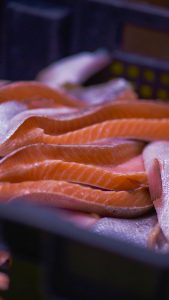
Gravad rainbow trout
Offers gravad rainbow trout to customers and for resale.
Learn about the service →
Wholesale and corporate deliveries
To supply fish products to shops, restaurants, industrial kitchens and other business customers nationwide.
Learn about the service →
Orders by phone
Taking orders and further enquiries by telephone.
Learn about the service →Interested? Contact us!
Contact us using the form below