
Fish freshness: how to identify quality on receipt
Fish freshness is one of the most important quality factors in professional kitchen deliveries: it affects taste, waste, workplace safety and, ultimately, the customer experience. When fish freshness is systematically assessed at the point of delivery, decisions are consistent regardless of who receives the shipment. This article reviews practical checklists and…

You can leave us a call request
Leave your name and number and we'll call you back.
Fish freshness is one of the most important quality factors in professional kitchen deliveries: it affects taste, waste, occupational safety, and ultimately the customer experience. When fish freshness is systematically assessed at the door, decisions are consistent regardless of who receives the delivery.
This article provides practical checklists and observations that can be used to quickly and documentably verify the quality of products supplied by responsible operators like Rågårds Lax Oy Ab. The emphasis is particularly on the everyday needs of professional kitchens: clear criteria for appearance, smell, texture, temperature, and packaging labels.
Fish freshness on receipt: quick basic process
A good acceptance inspection is a combination of routine and critical thinking. The goal is not to "find faults", but to ensure that the cold chain has been maintained and that the product matches the order and its intended use. Once the process is standardised, deviations become immediately apparent: for example, unusual condensation on packaging or an abnormal odour is easier to notice when you know what "normal" looks and smells like.
I recommend creating a one-page A4 checklist for the reception area to follow each time, in the same order. At the same time, it is advisable to agree in advance in which situations a product will be conditionally accepted (e.g., a minor cosmetic defect that does not affect its use) and in which situations a complaint will be made. A unified method reduces ambiguity and supports self-monitoring.
Reception 60-second brief When time is tight, this order helps keep the Freshness of Fish assessment in check.
Check the documents Order, consignment, dates, and possible requests/breeding and origin information.
Measure the temperature Surface temperature and, if necessary, the product's core temperature, according to the agreed self-monitoring method.
Look at the packaging Compactness, leaks, ice quality, integrity and possible swelling/vacuum anomaly.
Perform a sensory assessment Appearance, smell and texture (from sample packaging if necessary).
Document Record any deviations, take a photograph if necessary, and agree on follow-up actions immediately.
If you want to expand the basic process to include the procurement phase, you should read the internal summary: What to consider when buying fish and shellfishIt helps to ensure that the acceptance criteria align with the order requirements.
Appearance and surface: what does fish freshness look like in practice?
Appearance is the quickest signal, but it requires clear "accept/reject" boundaries. In whole fish, the eyes should be bright and slightly bulging, the gills reddish (depending on the species), and the surface slime layer smooth. For fillets and pieces, the primary characteristics sought are glossiness, an intact surface, and a natural colour without greying or drying out. A surface that is dry, "leathery," or has an overly darkened edge often indicates that the product has been exposed to air or temperature fluctuations.
The amount of liquid in the packaging also tells a lot. A small amount of clear liquid may be normal, but abundant drainage or cloudy, frothy liquid is a warning sign. In vacuum packaging, the fish flesh should be tightly under the film without large air bubbles. Especially with gravlax and cold-smoked products, a packaging defect (e.g., a weak seal) can significantly shorten the shelf life.

When going over the appearance criteria with the whole team, it is advisable to standardise the terminology. Internal page Glossary in plain language To help make observations comparable (e.g. what is meant by "drying", "discoloration", or "surface sheen").
Smell and texture: The freshness of fish sensed
The smell is often the most reliable single indicator, but it must be done correctly: quickly, at a cool temperature, and primarily from an unopened batch sample, as agreed. The smell of fresh fish is mild and fresh; a strong, “pungent”, cloyingly sweet, or clearly ammoniacal odour is an anomaly. Remember also that spices, smoking, or marinades can mask flaws – which is why packaging integrity and temperature are always assessed upon receipt.
In construction, elasticity is sought. The fillet should flex when pressed and return, not remain "dented" or crumble easily. Slime on the surface does not automatically mean poor quality (a thin layer of slime is natural on a whole fish), but sticky, uneven, or excessively shedding slime, combined with an odour, is a clear risk signal. If a deviation in structure is noted upon receipt, it should be accurately recorded: was it just one package or several boxes from the same batch?
When the criteria are shared, the freshness of fish is not a matter of opinion but a repeatable quality assurance.
Sensory evaluation is also a training issue. It is advisable to give new employees brief training on what "good" looks and feels like in the specific species and product formats you use. For Rågårds Lax Oy Ab's products, a consistent evaluation also helps the supplier: a complaint is easier to handle when the observation is precise (e.g., "air in vacuum + cloudy liquid + surface temperature above limit").
Brief note
If the team has any uncertainty about what the product-specific terms or sales items mean, resolve it before the rush leads to mistakes.
Temperature and the cold chain: Fish freshness is measured, not guessed
The cold chain is the backbone of freshness. Even if a product looks good, the wrong temperature can accelerate spoilage and increase microbiological risk. Therefore, at goods-in, the temperature is always measured using the agreed method: the same thermometer, the same measurement point, and the same recording procedure. Calibrating and cleaning the thermometer are part of self-monitoring, just like taking the measurements themselves.
The measurement method depends on the product. For instance, in refrigerated boxes, the surface temperature may be low even if there is a warmer spot inside, if the box has been handled for a long time. In vacuum packaging, the surface temperature often provides a good indication, but in unclear situations, the temperature between the product and the packaging can be measured, or spot checks can be carried out according to self-monitoring procedures. It is also good practice to check the overall appearance of the load: are there meltwater in the boxes, is the crushed ice fresh or "slushy", and are there clear warm spots in the load.
| Checklist item | What are you watching? | Action deviating |
|---|---|---|
| Temperature | Measured temperature and cold chain indicators (ice, condensation) | Book, take a picture, isolate the batch and agree with the supplier on the next steps |
| Packaging | Tightness, leaks, vacuum integrity, markings | Discard damaged packaging, check batch extent |
| Sensory findings | Smell, colour, lustre, elasticity | Do not use a suspicious product, document and complain. |
Up-to-date general guidelines on food safety and the importance of the cold chain can be found in reliable sources. One useful overview is Food hygienethrough which one can understand why temperature, time, and method of treatment are directly related to safety and quality.
Packaging markings and traceability: the final lock on receipt
Packaging labels are not mere bureaucracy, but part of freshness management. Dates, batch numbers, origin and product type information, and storage instructions affect how a product should be directed into production (FIFO/FEFO), how it should be labelled internally, and how quickly it should be used. When labels are unclear or missing, freshness management also suffers: you cannot reliably plan the order of use or demonstrate traceability.
It is particularly advisable in professional kitchens to agree on what to do if a discrepancy is found between the order and the packaging upon receipt (e.g., wrong type of fish, different size than agreed, missing batch code). In such cases, the fish's freshness may be good in itself, but the product may not be suitable for the planned dish or for allergy and recipe requirements. A clear procedure reduces confusion, rushed compromises, and costs.

Checklist for notations These points ensure traceability and that the freshness of the fish can be linked to the correct batch.
Product name and species Does the delivery match the order and the prescription (including any additives)?
Date and storage instructions Is the allocated time sufficient and the instructions realistic for your process?
Batch/lot information Is there a unique identifier for complaints and traceability?
Packaging type Vacuum/MAP/loose box: does the selected format comply with the agreement?
When the checking of markings becomes routine, internal communication also becomes easier: production, preparation, and shift managers can immediately see which batch will be used first. If you want to ensure that the rules of the entire supply chain are clear, take a look at Rågårds Lax Oy Ab's homepage through to current instructions and product range.
Deviations, documentation and consistent procedures in the kitchen
A finding made at reception is only valuable if it leads to consistent action. Therefore, it is worth describing the handling of deviations as a short process: who decides on acceptance, who makes a complaint, where it is recorded, and how the product is separated from others (e.g., a "quarantine shelf" in the cold store). When this is agreed in advance, urgency does not dictate decisions.
Precision is paramount in documentation. Record what was observed (not just "bad"), the extent (one package / the entire batch), and what was measured (temperature, time, measurement location). If necessary, take a photograph of the packaging and labels. This helps the supplier to ascertain the cause and speeds up credit or replacement delivery. It also protects the kitchen: self-monitoring will leave a record that the fish's freshness was assessed and the decision was based on observations.
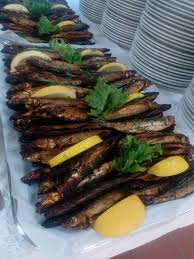
Key points of harmonization When these are in order, the Fish Freshness line will remain the same from shift to shift.
Roles and responsibilities Name the recipient and deputy, and the decision-making authority for deviations.
One method of measurement Same metric, same logging method and a clear operating threshold.
One checklist Appearance–smell–structure–temperature–markings always in the same order.
Training for new recruits Show examples of acceptable and non-conforming products, and a sample entry.
Finally, if you want to add even more certainty to the reception, it is advisable to hold occasional 10-minute "freshness meetings" to review the deviations and lessons learned from the previous month. This way, quality management will not rest on the shoulders of a single expert but will become a common way of working for the entire kitchen.
Do you want to harmonise fish reception practices?
Contact Rågårds Lax Oy Ab and ask for tips on products, deliveries, and quality criteria for reception in professional kitchens.
This is how we can help
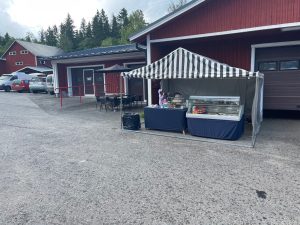
Fresh rainbow trout for sale
I sell domestic rainbow trout fresh daily to various customer groups.
Learn about the service →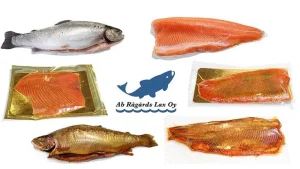
Hot smoked rainbow trout
Prepare and sell warm-smoked rainbow trout for everyday and special occasions.
Learn about the service →Cold-smoked rainbow trout
Prepares and sells cold-smoked rainbow trout to order.
Learn about the service →
Gravad rainbow trout
Offers gravad rainbow trout to customers and for resale.
Learn about the service →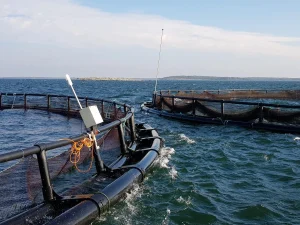
Wholesale and corporate deliveries
To supply fish products to shops, restaurants, industrial kitchens and other business customers nationwide.
Learn about the service →
Orders by phone
Taking orders and further enquiries by telephone.
Learn about the service →Interested? Contact us!
Contact us using the form below