
Ensured this: How to Secure the Cold Chain of Fish and Shellfish – A Guide for Restaurants and Catering Kitchens
The cold chain for fish and shellfish is one of the most important daily quality factors for restaurants and catering kitchens: it directly affects safety, taste, texture, and waste. When the cold chain is broken, even for a moment, the microbiological risk increases and the shelf life of the raw material shortens – often unnoticed until the quality deteriorates or the product has to be…

You can leave us a call request
Leave your name and number and we'll call you back.
The cold chain for fish and shellfish The cold chain is one of the most important everyday quality factors for restaurants and catering kitchens: it directly affects safety, taste, texture, and waste. If the cold chain is broken, even for a moment, the microbiological risk increases and the shelf life of raw ingredients decreases – often unnoticed until the quality deteriorates or the product has to be discarded. This guide practically covers the critical steps from receiving to storage and preparation, so that staff know what to measure, how to act, and how to document deviations.
The instructions are suitable for both small restaurants and large kitchens, and they are easy to incorporate into your self-monitoring procedures. If you would also like to cover the cornerstones of purchasing and supplier collaboration, start on the page What to consider when buying fish and shellfishin which the principles of choice and quality are explained from the perspective of Rågårds Lax Oy Ab.
The cold chain for fish and shellfish begins at reception.
The reception is the most critical moment of the cold chain, as it involves the most variables: transport, loading, unloading, waiting, and haste. A good practice is to agree on a clear reception window, designate a responsible person, and ensure that temperature measurement is always carried out in the same way. This way Cold chain for fish and shellfish it does not depend on "feeling", but is based on repeatable routines.
When the delivery arrives, check the entire consignment at the same time: packaging intact, sufficient ice or cold packs, products protected from light and warm air currents, and transport boxes clean. If you use temperature loggers or supplier temperature reports, review them upon receipt and save them as part of your self-monitoring. Temperature requirements and general principles can also be found in the official guidelines, for example From the Finnish Food Authority's guidelines on the food sector.
Check-in checklist When these are done using the same formula every time, deviations are found in time and complaints are clear.
Measure and record the temperature Take the measurement at the very beginning of the excavation; use a calibrated meter and the agreed measurement point.
Check packaging condition Look for leaks, bulges, broken seams, and unusual odours at the box level.
Check the markings Dates, batch details, origin and storage instructions, and any allergen information.
Rapid transfer to cold Avoid "intermediate storage" in aisles; plan your route and available shelf space in advance.
Once the basic reception process is working, the next step is to standardise language and terminology: what do you mean by “fresh”, “melted” or “pre-prepared”? This will facilitate induction and reduce misunderstandings. A helpful aid for this is Glossary in plain languagewhich can also be attached to internal training materials.
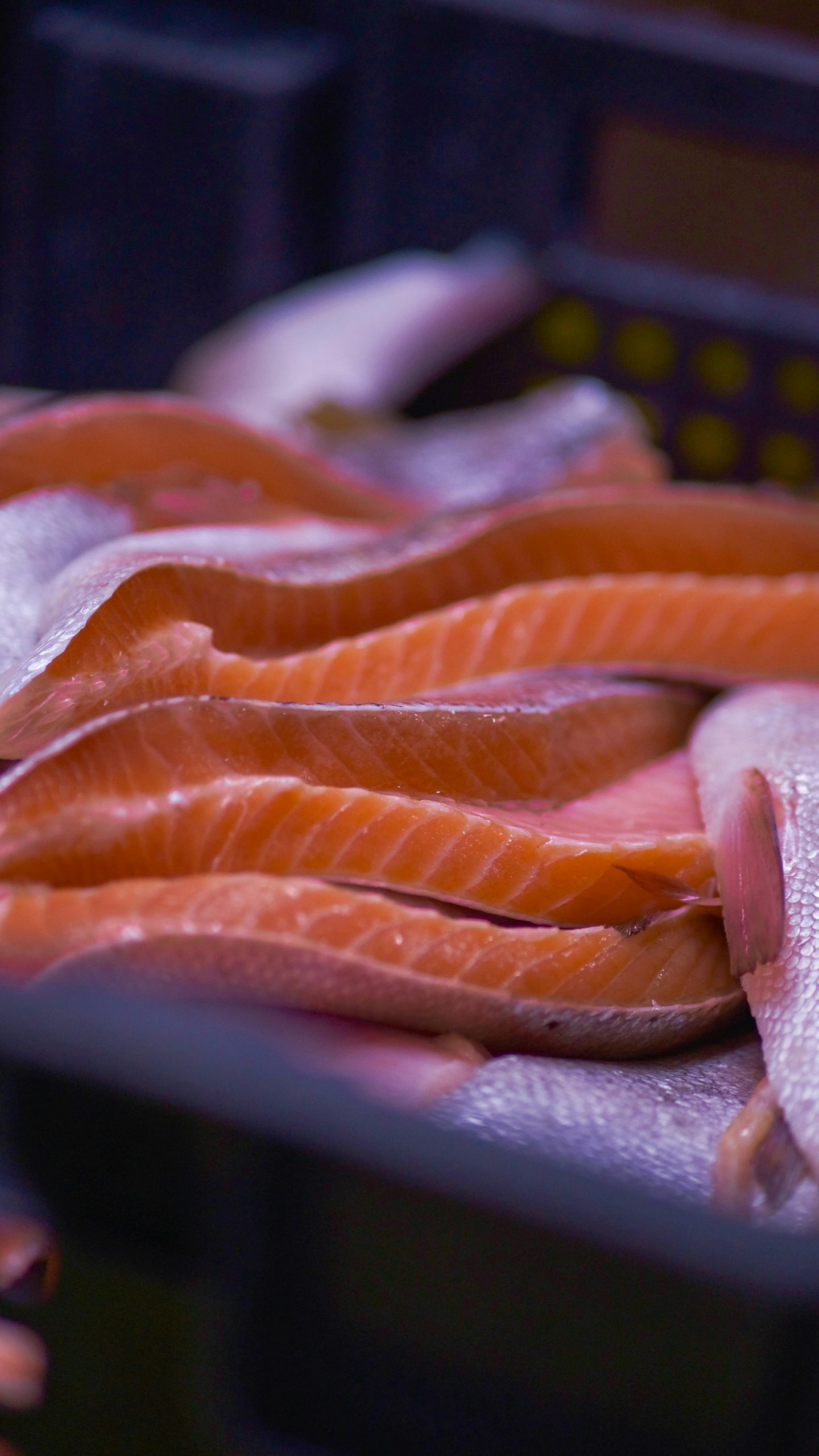
Storage: temperatures, air circulation and separation in practice
In storage, the cold chain is "quiet work": doors open, products move from shelf to shelf, and peak times momentarily increase the heat load. Therefore, a mere thermostat setting is not enough. Ensure the cold room has a clear spatial allocation (fresh fish, shellfish, vacuum-packed, defrosted, pre-cooked) and that air circulation is functioning: products must not block fans or be too close to the back wall.
Separation is also about controlling cross-contamination. Raw fish and shellfish should be stored on lower shelves to prevent dripping, and ready-made or cooked products should be kept on higher shelves. A tight, leak-proof GN container or a protected transport box reduces the spread of odours and liquids. At the same time, a single procedure for thawing should be agreed upon: always thaw under controlled refrigeration, not at room temperature, and thaw liquids should be disposed of in a controlled manner.
If you measure, record, and act in the same way every time, a cold chain deviation turns from guesswork into a manageable routine.
The "little" everyday things in a warehouse that have a big impact With these, you'll reduce waste and extend the lifespan without additional investment.
FIFO and clear expiry dates Older batches to the front, new ones to the back; mark the opened packet with the date opened.
Ovikuri So, whoever is looking for multiple products at once; avoid repeatedly peeking through the door when it's busy.
Separate work items Use your own designated dishes and utensils for fish and shellfish.
Draining and water management If you use ice, ensure that meltwater does not come into contact with other products.
Furthermore, ensure equipment monitoring: automatic temperature monitoring and alarms are good, but they do not replace the daily "situational awareness" of staff. Do a quick check before service: does the air circulation feel normal, is there water on the floor, is a box left too close to the door? These observations are often the first signs of a cold chain risk.
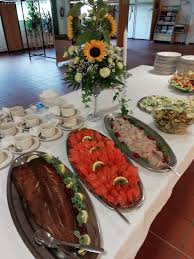
Preparation and portioning: maintain the cold chain for fish and shellfish throughout the process
In the kitchen, the cold chain is most often broken during preparation: filleting, peeling, portioning, and marinating are done in a hurry, and the products have time to warm up on the counter. The solution is not “do it faster,” but “do it in smaller batches.” Take only the amount from the cold as you can handle within the allocated time, and put the rest back immediately. This is a practical way to ensure that Cold chain for fish and shellfish remains under control even at peak load.
Workstation design has a greater impact than is often realised. A cold table, ice bath, or cold plate provides a safety margin, but even standard “cold logistics” help: pre-cooled GN containers, lidded trays, a clear route from the cold room to the workstation and back. Also, remember allergen management: shellfish are a common allergen, so separate equipment and clear labelling reduce risks.
Brief note
Once the process is described and roles agreed, onboarding speeds up and deviations decrease. Save the instructions as an appendix to self-monitoring and update them according to the season.
If you are serving food in a buffet or on a service line, pay attention to temperature control in the presentation as well: sufficient cold capacity, small dish sizes, and frequent replacement are a surer method than "one large serving dish at a time." A good rule of thumb is to replace the dish entirely with a new batch (and wash the dish) rather than continuously adding new food on top of the same dish.
Documentation and self-monitoring: measure correctly, react quickly
Self-monitoring is not just a form, but a tool that tells what actually happened. Clearly agree on what is measured (receiving, cold store, preparation, potential thawing), when it is measured (at the start of the shift, upon receiving, during peak hours) and where it is recorded. When measuring becomes routine, deviations don't feel like accusations but normal "situation updates" and corrective actions.
The method of measurement is also important. Surface temperature is not the same as the product’s core temperature, and measuring through packaging can distort the result. Use a penetration thermometer as needed (observing hygiene) and ensure the thermometer's calibration is maintained. If using data loggers, agree on who will monitor alerts and what actions will be taken if the temperature rises due to, for example, equipment malfunction, a broken door, or overloading.
| Step | Risk | Working practice |
|---|---|---|
| Reception | Temperature deviation during transport | Measure immediately at the start of the demolition, record and react with the agreed limit value |
| Storage | Deterioration of air circulation and cross-contamination | Shelf arrangement, protection, lower shelves for raw products, FIFO and door gauge |
| Preparation | Products warming on the table | Small batches, lidded containers, chilled GN containers, and rapid chilling. |
| Deviations | Delay and unclear responsibility | Corrective actions predefined: isolate, assess, decide on further use, and record |
When a deviation occurs, speed and consistency are key: isolate the batch, assess usability according to the agreed model, decide on the follow-up action (use quickly, heat, discard, claim), and document. This also generates data that can be used to reduce waste: if deviations occur repeatedly at the same time of day or with a specific product, the cause is often in the process, not the raw material.
Personnel and processes: make the cold chain a common way of working
Even the best equipment is no help if the process varies from shift to shift. That's why it's worth "productising" the cold chain into a model within the kitchen: an induction card for receiving, one page on storage rules, and clear workstation instructions for preparation. When instructions are short and concrete, they are also followed. A clear receiving policy also makes cooperation easier for a supplier like Rågårds Lax Oy Ab: complaints are precise and delivery quality is easier to verify.
Additionally, utilise role allocation: one person is responsible for reception, another for storage locations, and a third for the preparation "cold chain". Roles can rotate, but responsibility must always be assigned. This reduces situations where "it was thought someone else was handling it". At the same time, it is advisable to agree on how to proceed during busy periods: what is the minimum standard for measurements and what must never be bypassed.
Deployment in a week Lightweight model, also suitable for busy seasons.
Day 1–2: Current state mapping At what point are products "out in the cold" for the longest, and why?
Day 3–4: Common Operating Picture Let's agree on the measurement points, responsibilities, recording method, and deviation limits.
Day 5: Introduction and tools Ensure thermometers, disinfectants, GN containers, lids, and labelling stickers are in order.
Day 6-7: monitoring and adjustment Let's check the entries, fix the bottlenecks, and agree on a weekly routine.
Finally: make the cold chain part of the quality conversation for the customer too. When raw material handling is under control, the end result is visible in the dish: a cleaner taste, better texture, and consistency day after day. If you want to build a complete offering from a sales and product information perspective, also check out 10 facts about selling fish – helps to connect practical kitchen work and a successful customer experience.
Do you want to ensure the cold chain in practice?
Let's go through your reception, storage, and preparation routines, as well as suitable operating models for handling fish and seafood.
This is how we can help
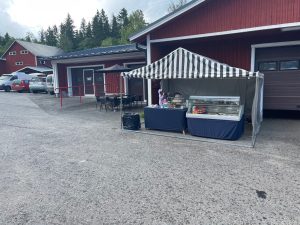
Fresh rainbow trout for sale
I sell domestic rainbow trout fresh daily to various customer groups.
Learn about the service →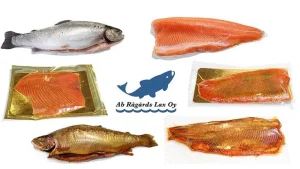
Hot smoked rainbow trout
Prepare and sell warm-smoked rainbow trout for everyday and special occasions.
Learn about the service →Cold-smoked rainbow trout
Prepares and sells cold-smoked rainbow trout to order.
Learn about the service →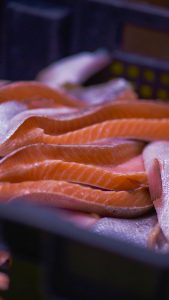
Gravad rainbow trout
Offers gravad rainbow trout to customers and for resale.
Learn about the service →
Wholesale and corporate deliveries
To supply fish products to shops, restaurants, industrial kitchens and other business customers nationwide.
Learn about the service →
Orders by phone
Taking orders and further enquiries by telephone.
Learn about the service →Interested? Contact us!
Contact us using the form below